Lighting that works for cleaner air
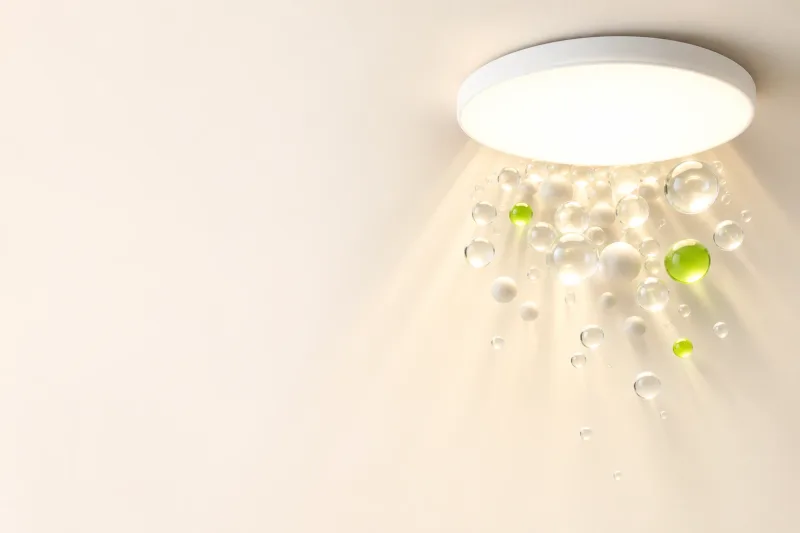
EVLN is a patented photocatalytic technology. It works in the ordinary visible light of the LED luminaire, for as long as the light is switched on.
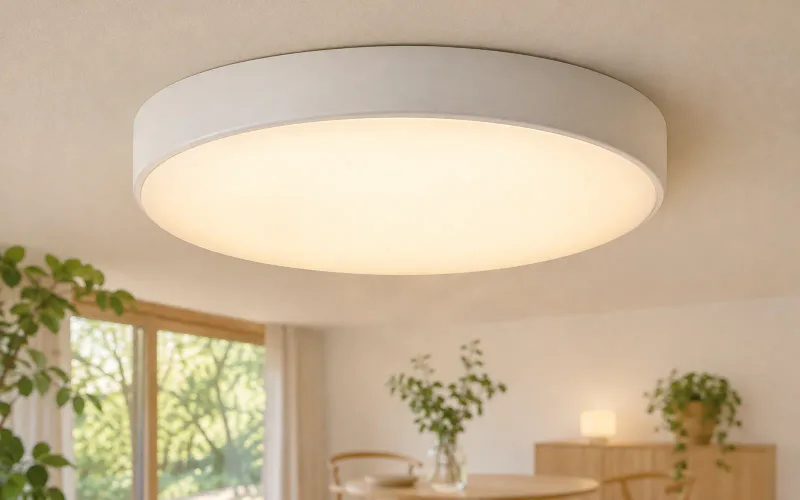
How it works
Switch on the light
Enjoy even LED lighting in your choice of colour temperature.
The EVLN coating gets to work
The patented photocatalytic coating on the luminaire is activated by ordinary visible light.
Cleaner air and surfaces
The technology reduces bacteria, fungi and mould and limits their growth around the luminaire.
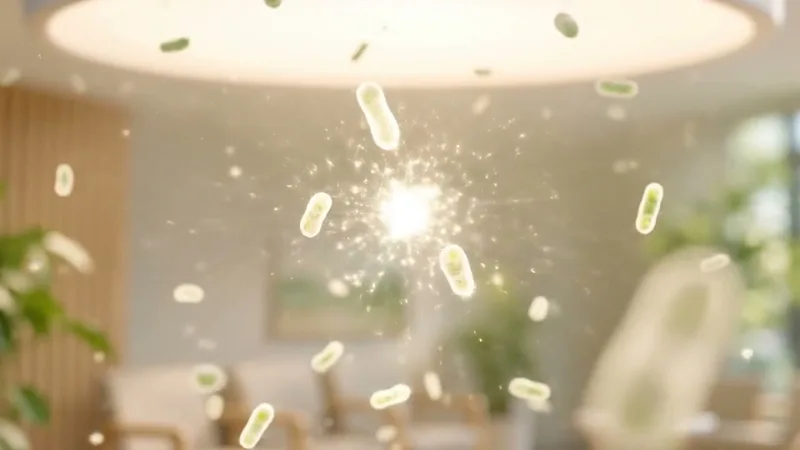
Visible light photocatalysis
Photocatalysis is a process in which light activates a coating containing a catalyst. Reactions at the catalyst's surface reduce and limit bacteria, fungi and mould.
Effectiveness up to 3 m from the luminaire
More about the technology
Conventional photocatalysts require UV radiation. The patented EVLN coating works in ordinary white LED light. It works wherever the luminaire's light falls on its coating.
The coating contains titanium dioxide and copper oxide. Copper enables photocatalysis in visible light without UV.
The technology works beyond the luminaire itself, reducing and limiting microorganisms in the air and on surfaces around the light.
Test details – Ugene
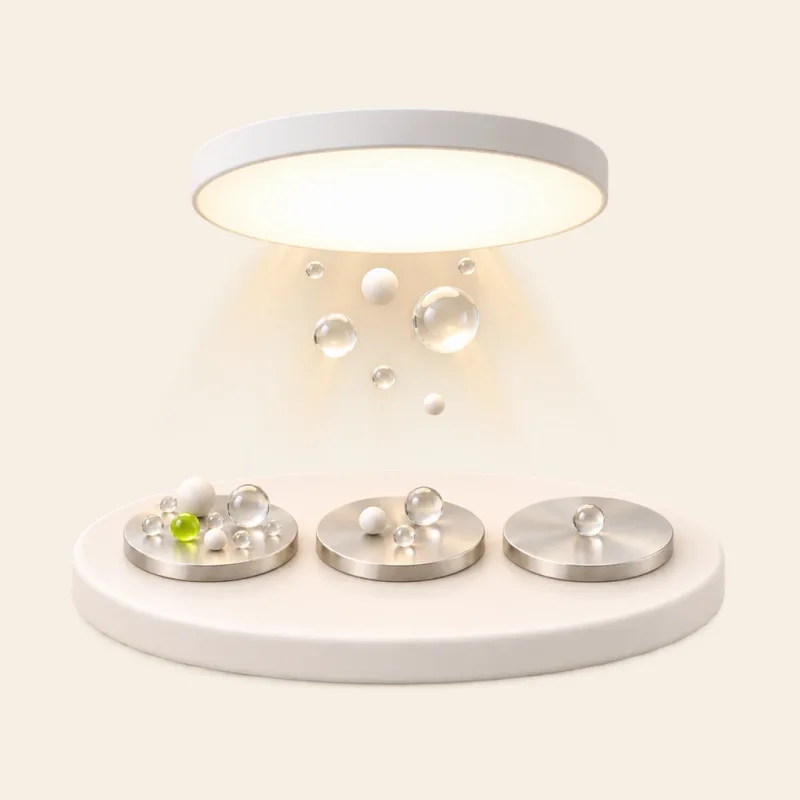
In Ugene’s surface test (Singapore, 8 January 2024), S. aureus counts fell by 99.71% after 6 h and 99.94% after 24 h. E. coli ATCC 25922 counts fell by 99.67% after 6 h and 99.98% after 24 h. The 3 cm stainless steel discs were 60 cm from five luminaires. Temperature was 23 °C and relative humidity 60–65%. Reductions are relative to bacterial counts at the start of the measurement.
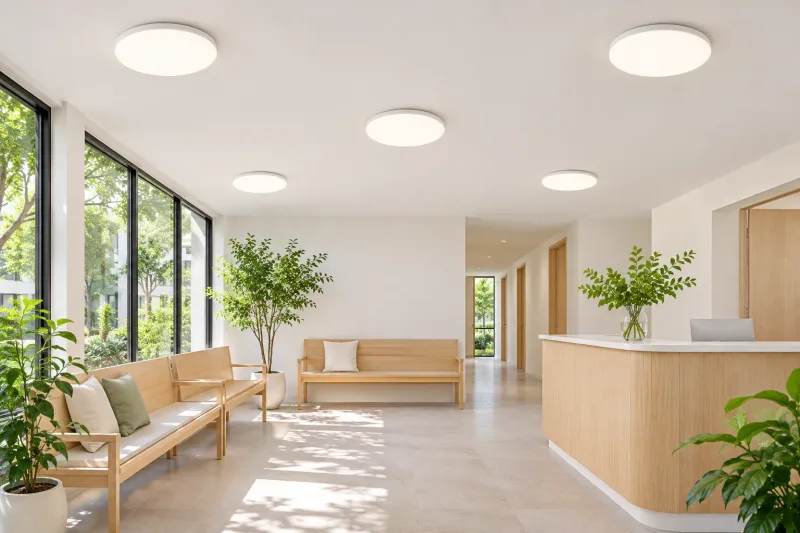
The coating and the indoor measurements
More about the technology – The coating and the indoor measurements
Photocatalysis takes place on the luminaire coating activated by white LED light. IBPRS measured airborne microorganisms, and Ugene measured bacteria on steel discs placed away from the luminaire.
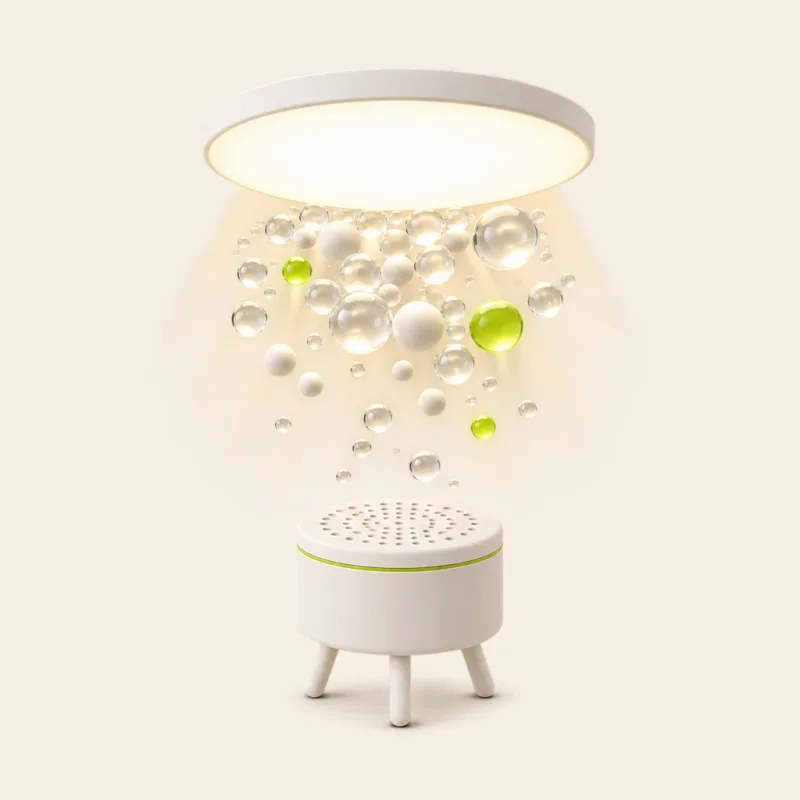
How EVLN compares with other solutions
Comparing the options
Swipe the table sideways to compare →
| Method | Purpose | Use around people | What to measure and how | Limitations |
|---|---|---|---|---|
| Open UV-C | Surface irradiation. | Keep people out of the exposure zone. | UV-C dose on the surface measured with a radiometer, and microbial counts from samples. | Shadows limit the dose. Exposure can harm eyes and skin. |
| Enclosed and upper-room UV-C | Treats air in a chamber or above the occupied zone. | May run with people present when designed correctly and exposure is controlled. | Airflow, UV-C dose or irradiance from a radiometer, and microbial counts from air samples. | Depends on airflow, shielding and installation. |
| 405 nm light | Visible-light irradiation of surfaces. A white light source can include 405 nm. | Depends on the luminaire and the light exposure assessment. | Spectrum from a spectroradiometer, exposure time and microbial counts from samples. | Results depend on dose, distance and which surfaces receive light. |
| HEPA air purifier | Removes particles from air passing through the filter. | Can run with people present when used as directed. | Particle counter, airflow and clean air delivery rate (CADR). | Treats air passing through the filter. The filter needs replacement. |
| Flow-through photocatalytic purifier | Treats air passing through a chamber with an illuminated catalyst. | Depends on the unit design, instructions and emissions assessment. | Airflow and pollutant concentrations at the inlet and outlet. Microbial testing uses air samples. | Treats air flowing through the unit. Results depend on contact time and may require by-product testing. |
| EVLN | Photocatalytic coating activated by white LED light in an ordinary luminaire. | The coating works when the luminaire is on. Follow the instructions for the model. | Microbial counts from air or surface samples. | Results depend on the luminaire layout, operating time and test conditions. |
Test results
Test details
 up to −99.98%Bacteria on surfaces after 24 hUgene · Test details
 RG0photobiological exempt group (EN 62471)CE declaration
 PZHPZH hygienic certificateNo. B.BK.60112.0440.2024 · valid until 17/06/2030
EV Sun lighting complements but does not replace cleaning and hygiene procedures.
Safety
UV-free and ozone-free
The luminaires are classified in the exempt group (RG0) to EN 62471. Photocatalysis does not produce ozone, and the luminaires contain no UV light sources or ionisers.
Photobiological safety
The CE declaration lists the photobiological exempt group RG0 (EN 62471).
Insignificant nanoparticle emissions
No significant nanoparticle emissions from the coating, including during cleaning of the luminaire (CIOP-PIB test, 2025, model EVLN‑SDL-24W).
Patented technology
White LED light activates the EVLN coating. We can help you choose luminaires for your project.
Questions about the technology
Does an EV Sun luminaire provide the same light as a standard LED light?
Yes. The colour temperature depends on the model: 3000, 4000 or 6000 K. EVLN‑PL panels and EVLN‑VL linear luminaires have an adjustable colour temperature of 3500–6500 K.
Do I need to do anything to activate the technology?
No. EVLN technology works whenever the luminaire is switched on. There is no separate mode or button, and no cartridges to replace.
Can people stay in the room while the luminaire is on?
Yes. The luminaires are UV-free and ozone-free and are classified in the exempt group to EN 62471, so they can operate all day with household members, employees and customers present.
Will the luminaires work with my existing installation?
Yes. They are installed like standard LED luminaires, and the GU10 bulbs fit standard spotlights. When replacing T8 tubes, the installer adapts the fitting in line with the instructions.
How many luminaires do I need?
Use our lighting calculator or luminaire selection tool. For commercial premises, we offer a free DIALux lighting design.
Does EVLN work on objects under the light?
Ugene measured bacteria on 3 cm stainless steel discs 60 cm from five luminaires at 23 °C and 60–65% RH. S. aureus counts fell by 99.71% after 6 h and 99.94% after 24 h, and E. coli ATCC 25922 counts fell by 99.67% and 99.98%. These results apply to those conditions. EVLN complements routine washing and disinfection. Test details
Does EVLN work throughout the room?
Coverage depends on the number and placement of the luminaires and how long they are on. Send us your floor plans for a DIALux lighting design. Describe your rooms
How does EVLN differ from a photocatalytic air purifier?
A purifier moves air through a filter or chamber inside a separate unit. EVLN uses a coating on the luminaire, with no separate unit or filters.
Let's talk about your space
We'll select luminaires for your home, office or premises and prepare a quote. We respond within one working day.